
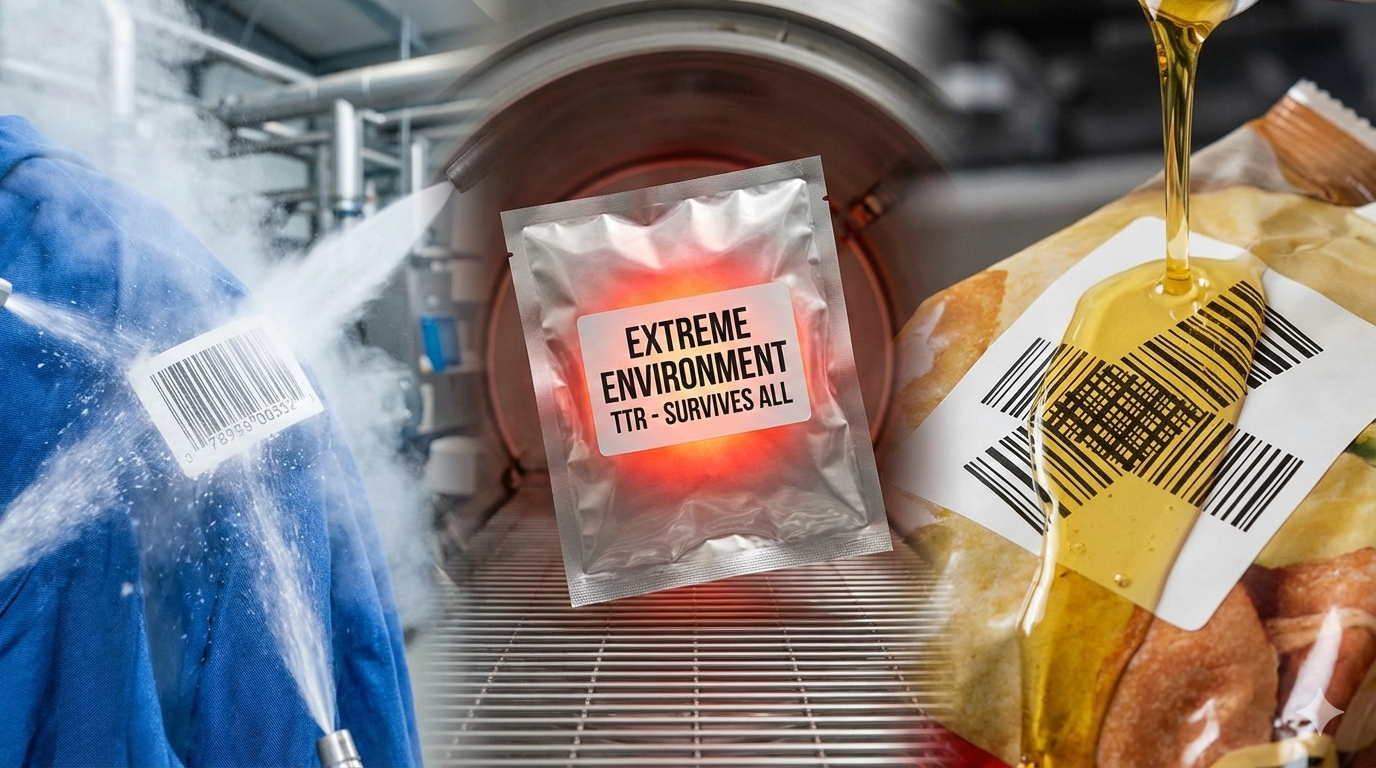
In the fast-paced world of global logistics and manufacturing, a label is far more than just a piece of paper. It is a critical data carrier—a digital handshake between a product and the supply chain. However, as industries move toward harsher environments and more rigorous sterilization processes in 2026, the vulnerability of “standard” printing has become a liability.
If a label fades, smudges, or peels, the data dies with it. This leads to lost inventory, compliance fines, and safety risks. To combat this, businesses are shifting away from general-purpose ribbons toward specialized Thermal Transfer Ribbons (TTR) engineered for extreme durability.
In sectors like healthcare and workwear rental, linens and uniforms undergo a brutal lifecycle. They are subjected to industrial laundry tunnels, high-heat drying, and steam pressing that can reach temperatures up to 200 Degrees Celsius.
Standard ribbons may survive a home wash, but they vanish under industrial detergents and mechanical friction. Premium Washable Resin Ribbons are specifically formulated to bond with textile substrates like nylon taffeta and polyester satin. This permanent bond ensures that asset-tracking barcodes remain scannable for over 100 wash cycles. For a hospital managing thousands of bedsheets, this durability isn’t just a convenience—it is the difference between efficient inventory management and massive replacement costs.
The food processing and pharmaceutical industries face a different “stress test”: the retort system. To ensure shelf-stability, products are often sterilized inside their packaging using high-pressure steam and extreme heat (130 degrees Celsius and above and above).
Ordinary wax or wax-resin inks will melt or bleed under these conditions. High-Performance Resins TTR are engineered to withstand the unique combination of moisture, pressure, and heat. By maintaining legibility through the autoclave process, manufacturers can guarantee “farm-to-fork” traceability, ensuring that batch numbers and expiration dates remain intact even after the most aggressive sterilization.
In the retail food environment, particularly in delis and bakeries, grease is a silent enemy. Fats and oils act as natural solvents that can dissolve standard thermal ink upon contact. When a barcode on a pack of artisanal salami or a buttery pastry smudges, it becomes unscannable at the point of sale.
This creates friction at the checkout and diminishes brand trust. Oil-Resistant Wax-Resin / Resin TTR ribbons provide a smudge-proof barrier. They offer the dark, high-contrast print required for QR codes and nutritional facts while remaining impervious to the oils inherent in food packaging.
Finally, in the chemical industry, labeling is a legal mandate. Under the Globally Harmonized System (GHS), hazardous material labels must remain legible even after exposure to the chemicals they contain. If a drum of solvent leaks, the warning label must survive the spill to protect workers. Achieving BS5609 compliance (the British Standard for marine immersion) requires a full resin ribbon that offers maximum chemical and saltwater resistance.
