
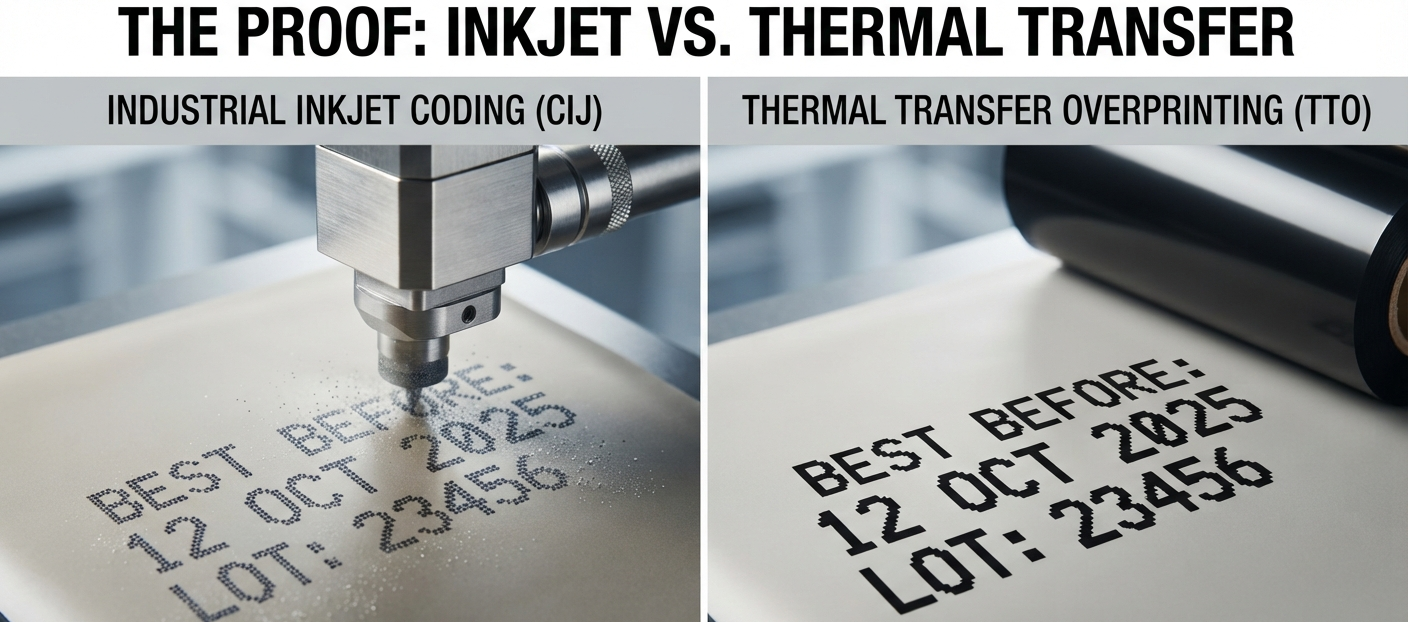
Choosing the right printing and coding technology is a critical operational decision for any packaging or manufacturing facility. From ensuring regulatory compliance to maintaining high-speed throughput, your choice of printer directly influences efficiency, operational costs, and overall print clarity.
When evaluating options for industrial coding and marking, two primary technologies frequently stand out: Thermal Transfer (TTR/TTO) and Inkjet systems.
Thermal Transfer: Utilizes a precise heat transfer process via a ribbon to deposit resin-fused or wax-resin images directly onto packaging substrates. This produces razor-sharp, high-contrast, and opaque codes that resist smudging, scratching, moisture, and extreme environments like heat-sealing or retort systems.
Inkjet: Relies on liquid ink droplets to form characters, which can sometimes bleed, feather, or fade depending on the substrate, drying times, and environmental conditions.
Thermal Transfer: Operates as a clean, dry process that requires virtually zero daily maintenance or handling of messy solvents.
Inkjet: Often requires regular nozzle cleaning, flushing, and ongoing handling of solvent-based inks, which can lead to clogs and unexpected production downtime.
Thermal Transfer: Eliminates common issues like clogged print heads or dried-out ink cartridges, ensuring consistent, high-speed coding reliability.
Inkjet: While valued for non-contact printing across diverse substrates, complex fluid systems can demand frequent servicing and monitoring to prevent operational bottlenecks.
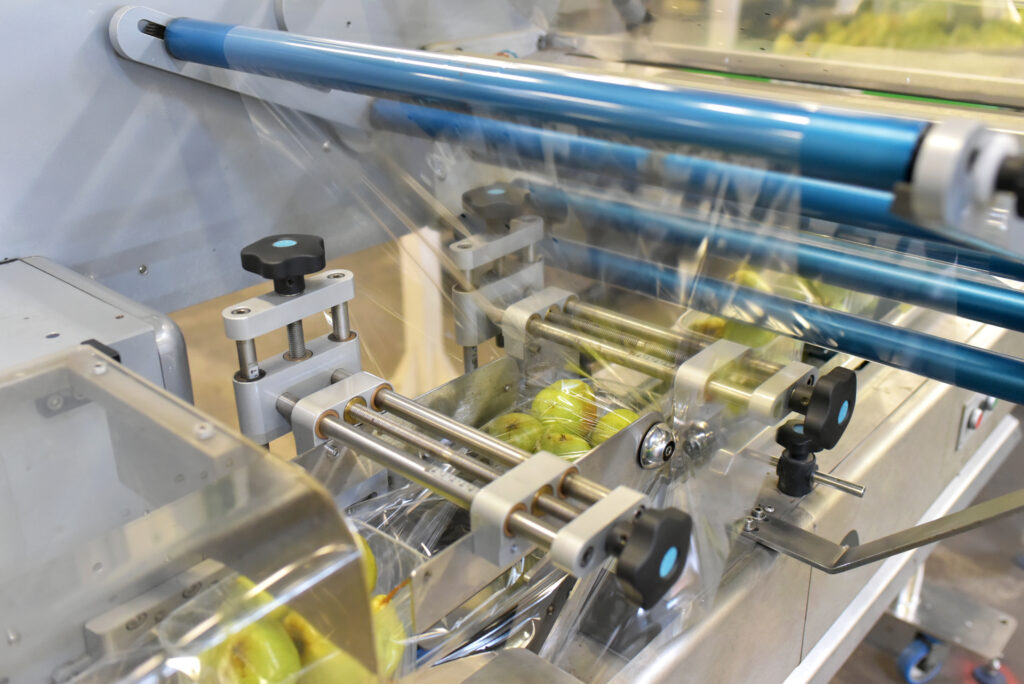 Thermal Transfer Overprinting (TTO) machine on production line
Maximizing line uptime requires more than just picking the right hardware; the quality of your consumable ribbon matters just as much.
Engineered for the most demanding industrial coding and marking environments, Transam provides high-performance Thermal Transfer Ribbons (TTR) designed to deliver crisp, durable, and mess-free results. Whether you are printing high-speed batch codes, expiration dates, or barcodes on flexible packaging, choosing a reliable ribbon ensures your print quality never compromises product traceability.
References
